

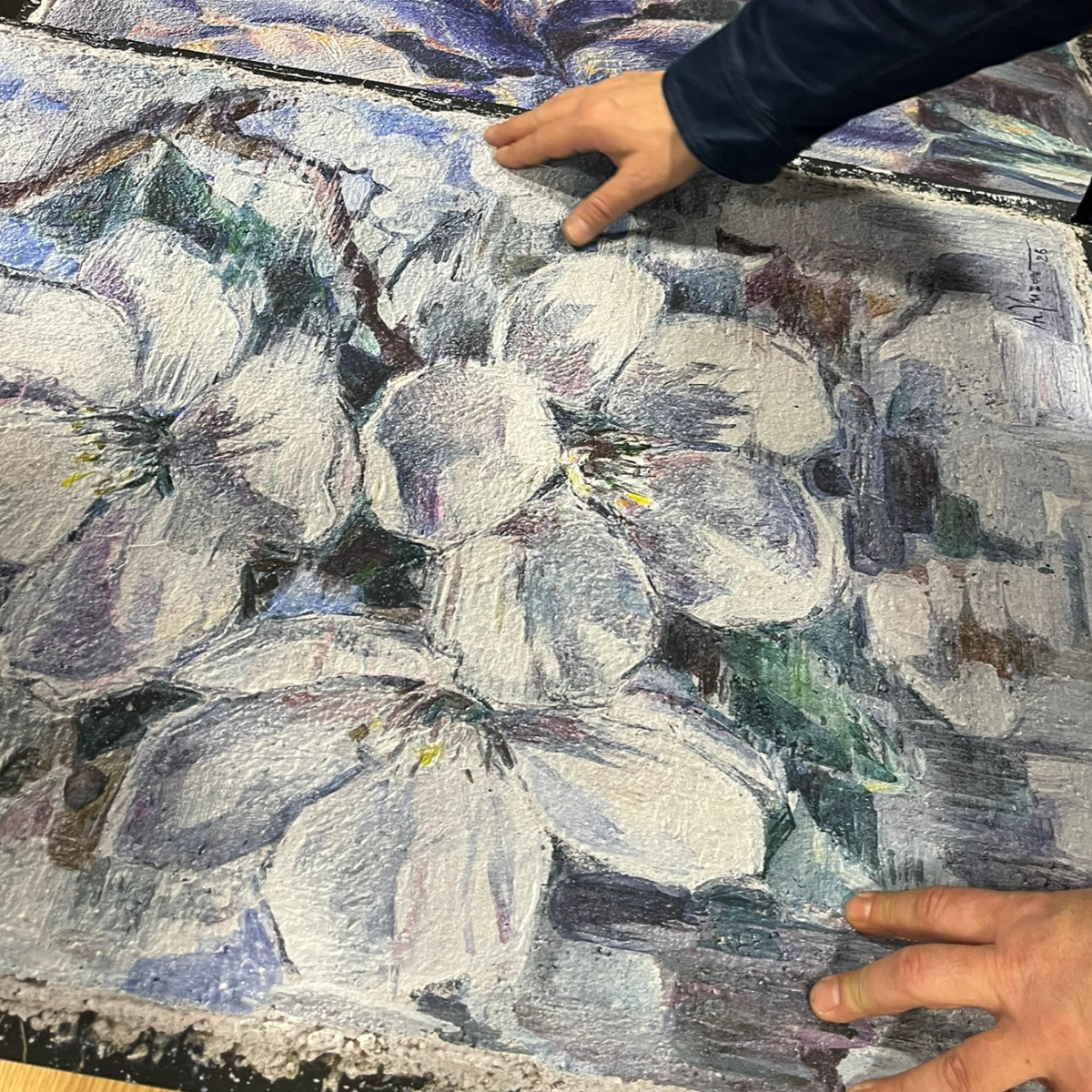
1. The Role of Paper Studies in Fresco Creation
Why Artists Make Cartoons and Color Tests
Before applying pigments to wet plaster, fresco artists rely on preparatory studies to plan compositions, experiment with color, and refine techniques. These studies—full-scale or scaled-down “cartoons”—allow artists to practice freely without risking costly plaster layers. Paper studies also help map proportions, perspective, and narrative elements, ensuring the final fresco is cohesive, technically sound, and visually compelling.
The Advantages of Paper for Fresco Practice
Paper is portable, flexible, and forgiving. Mistakes can be erased or layered, and multiple variations of a design can be tested without committing to a permanent wall. This freedom encourages experimentation with brushwork, shading, and color transitions, building confidence and technical insight before moving to plaster.
2. Choosing the Right Paper: Why Hahnemühle Matters
Surface Texture and Absorption
Hahnemühle papers are prized for surfaces that closely mimic the absorbency and texture of lime plaster. Pigments sit naturally on the surface, providing an accurate preview of how colors will behave when applied to a wet fresco layer.
Weight and Durability
Thick, archival-grade Hahnemühle papers resist warping, buckling, and deterioration during painting and drying. This stability is essential for repeated handling, layering, and careful review of the work.
Color Fidelity
High-quality paper ensures true pigment reproduction. Hahnemühle preserves brightness, contrast, and subtle tonal transitions, helping artists select colors that harmonize on plaster.
3. Types of Fresco Studies on Paper
Full-Scale Cartoons
Full-size preparatory drawings allow precise transfer of composition onto a wall or panel. They outline figures, architectural details, and decorative motifs, ensuring proportional accuracy and spatial cohesion.
Color Swatches and Tests
Small patches or study sheets are used to mix pigments and experiment with hue, saturation, and intensity. Plaster slightly alters pigment appearance, so testing on paper prevents costly mistakes.
Technique Experiments
Artists can practice brushwork, layering, glazing, and dilution methods on paper, anticipating absorption rate, drying behavior, and subtle interactions before applying pigment to wet plaster.
4. Tools and Materials for Paper-Based Fresco Studies
-
Pigments and Mediums: Use the same mineral pigments intended for the final fresco. Water is the medium for replicating transparency and mixing behavior.
-
Drawing Implements: Graphite, charcoal, and soft pencils allow corrections before transferring the final composition.
-
Brushes: Soft, natural-hair brushes simulate application on plaster. Techniques like layering, stippling, or glazing can be safely practiced on paper.
5. Transferring Cartoons to Plaster
Pouncing and Pricking Methods
Once the cartoon is finalized, artists perforate the lines and use powdered pigment (pounce) to transfer the design accurately onto wet plaster, preserving the original composition.
Direct Tracing
In smaller panels or controlled settings, cartoons can be traced directly using a stylus or soft chalk. Detailed paper studies make this process efficient and precise.
6. Benefits for Contemporary Fresco Artists
Creative Experimentation Without Risk
Paper studies allow experimentation with color combinations, brush techniques, and unconventional materials before applying them to plaster.
Educational and Portfolio Use
Hahnemühle studies can be preserved, scanned, or displayed, demonstrating process and experimentation. They offer a tangible record for students, collectors, or clients.
Efficient Workflow and Planning
By resolving design, color, and composition decisions on paper first, artists reduce errors, save materials, and streamline fresco execution.
7. Practical Tips for Effective Fresco Paper Studies
-
Work at the Right Scale: Use full-scale cartoons for murals and small sheets for color tests.
-
Maintain Accurate Color Records: Label pigments, mixtures, and drying times; photograph studies for digital archives.
-
Treat Paper Studies as Valuable Assets: Preserve studies in archival folders or portfolios. They are practice tools and historical documents.
8. Integrating Paper Studies into Your Fresco Workflow
Paper studies serve as a bridge between imagination and execution. They allow artists to:
-
Refine composition before committing to plaster.
-
Anticipate pigment behavior and technical challenges.
-
Experiment creatively without wasting materials.
-
Preserve the artistic process for educational, archival, or exhibition purposes.
By using high-quality Hahnemühle paper, artists simulate plaster absorbency and surface texture, making studies an indispensable part of the fresco-making process. This practice carries forward centuries of tradition while integrating modern precision, experimentation, and creative innovation.
The Monumental Art: Fresco in Religious and Civic Architecture
Buon Fresco vs Fresco Secco: Understanding the Key Differences in Mural Techniques