

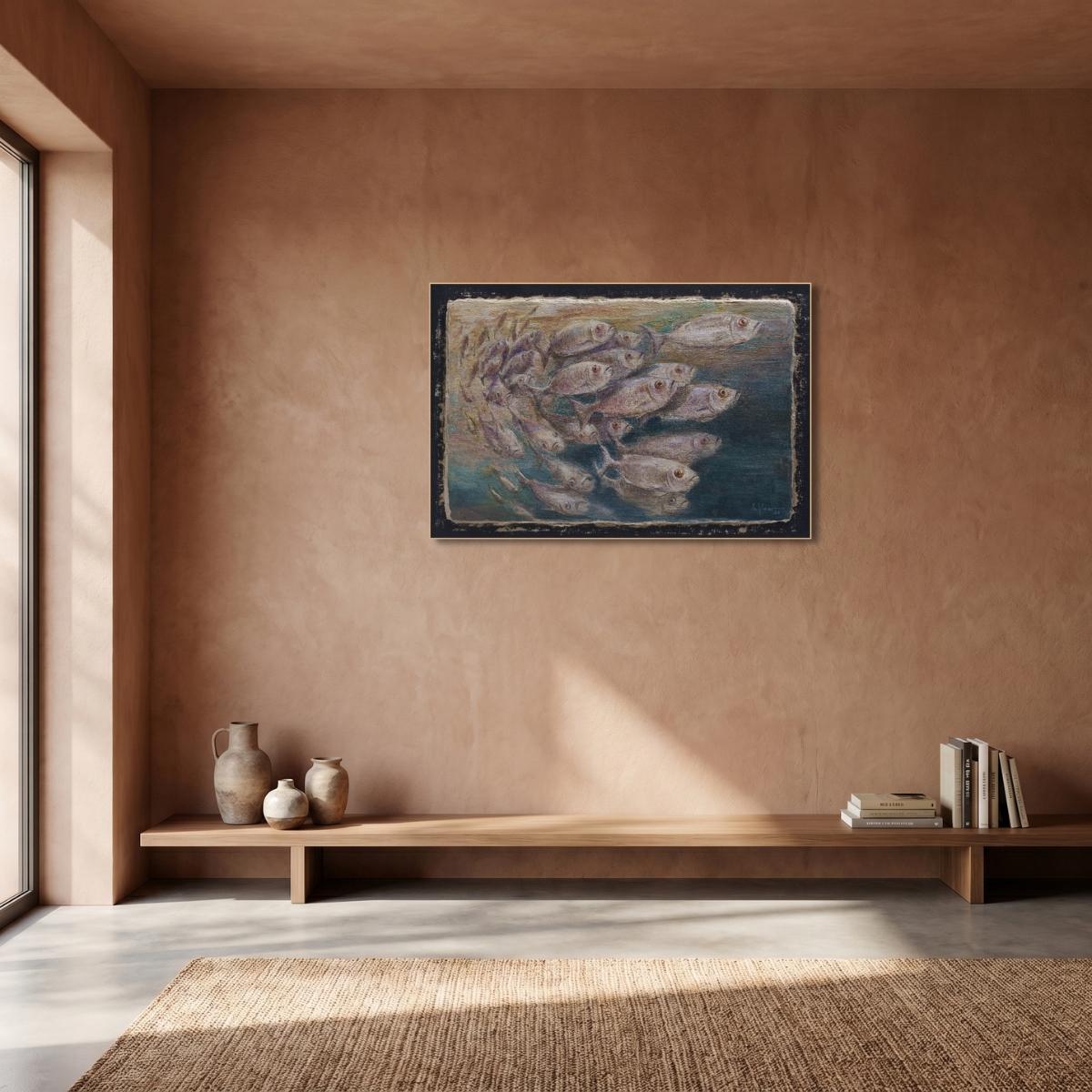
What is fresco painting? Fresco painting is an ancient wall painting technique in which pigments are applied to wet plaster. As the plaster dries, the colors become integrated into the surface, creating a durable form of artwork. The technique has been used for centuries to decorate churches, public buildings, palaces, and other architectural spaces.
Fresco art is especially important in the history of Western art because some of the world's most recognized paintings were created using this method. From ancient Roman walls to Renaissance masterpieces, frescoes have helped artists transform architectural surfaces into large-scale works of art.
For beginners, understanding the fresco meaning, materials, process, and history provides a useful foundation for appreciating this important art form.
What Does Fresco Mean?
The word fresco comes from the Italian word affresco, meaning "fresh." The name refers to the use of fresh, wet plaster as the surface for painting.
In traditional fresco painting, an artist applies water-based pigments directly onto wet lime plaster. The pigment does not simply remain on the surface. Instead, it becomes chemically bonded with the plaster as it dries. This process helps make a well-executed fresco artwork remarkably durable.
The term fresco is sometimes used broadly to describe wall paintings, but technically it refers to a specific painting process involving wet plaster.

How Does Fresco Painting Work?
The basic fresco technique involves preparing a wall with layers of plaster and then applying pigments while the final plaster layer is still wet.
The artist first prepares the wall and applies a rough plaster layer. A finer layer of plaster is then added to create a smooth painting surface. The artist works on manageable sections of wet plaster rather than covering the entire wall at once.
Pigments mixed with water are applied directly to the wet surface. As the plaster dries, a chemical reaction called carbonation occurs. This process locks the pigment into the plaster, helping the painting become part of the wall itself.
Because the plaster begins drying immediately, fresco painting requires careful planning, confident brushwork, and efficient execution.
A Brief History of Fresco Art
Fresco painting has a long history that stretches back thousands of years. Early forms of wall painting using plaster can be found in ancient civilizations, including the Minoan culture of the Aegean region.
The ancient Greeks and Romans also used wall painting techniques to decorate architectural interiors. Some of the best-preserved examples can be seen in ancient Roman cities such as Pompeii and Herculaneum, where walls were decorated with colorful scenes, figures, architectural designs, and decorative patterns.
During the Middle Ages, frescoes became particularly important for religious art. Churches and other religious buildings used large wall paintings to communicate biblical stories and religious ideas to viewers.
Fresco reached one of its most celebrated periods during the Italian Renaissance. Artists used the technique to create monumental compositions that combined storytelling, perspective, anatomy, and architectural design.
Among the most famous frescoes are Michelangelo's paintings on the ceiling of the Sistine Chapel and Raphael's The School of Athens. These works demonstrate how fresco could be used to create complex compositions on a monumental scale.
What Materials Are Used in Fresco Painting?
Traditional fresco painting uses relatively simple materials, but each one plays an important role in the process.
The main surface is usually a wall prepared with lime-based plaster. Lime is essential because it allows the chemical reaction that helps bind the pigments to the surface.
Artists traditionally use mineral and earth pigments mixed with water. Common pigments historically included materials derived from minerals, earth, and other natural sources.
Brushes are used to apply the pigments, while plastering tools help prepare and smooth the wall. Because the artist has limited time to work before the plaster dries, preparation is a crucial part of the fresco process.
What Is the Fresco Technique?
The fresco technique is generally divided into two main approaches: buon fresco and fresco secco.
Buon Fresco
Buon fresco, meaning "true fresco," is the traditional method. The artist applies pigments to wet plaster. As the plaster dries, the pigments become incorporated into the surface through carbonation.
This method is highly durable when properly executed. However, it requires the artist to work quickly because the plaster must remain wet while the painting is being created.
Fresco Secco
Fresco secco, meaning "dry fresco," involves applying pigments to dry plaster rather than wet plaster. Because the paint does not become chemically integrated with the plaster in the same way, it can be less durable.
Artists have sometimes used the dry technique to add details, corrections, or colors that are difficult to apply during the wet-plaster process.
The distinction between these methods is important when learning what fresco painting actually involves.
Why Is Fresco Painting Difficult?
Fresco painting requires both artistic skill and technical understanding. One of its biggest challenges is the limited working time.
Once wet plaster is applied, it gradually begins to dry. The artist must therefore know what will be painted before beginning each section. Corrections can also be difficult because changing a section of wet plaster may require removing it and applying fresh plaster.
The artist must also understand how pigments will appear when applied to wet plaster and how they may change as the surface dries.
These limitations make fresco different from many other painting techniques. It demands planning, speed, accuracy, and an understanding of the relationship between pigment and plaster.

What Makes Fresco Artwork Different From Other Paintings?
A major characteristic of fresco artwork is its relationship with architecture. Unlike a painting created on canvas, a fresco is usually designed directly onto a wall, ceiling, or other architectural surface.
This means the artist must consider the shape, size, lighting, and structure of the space. The artwork becomes part of the building rather than functioning as a separate movable object.
Frescoes can also be extremely large. Their scale allows artists to create immersive visual experiences that surround viewers within a particular architectural environment.
The durability of traditional fresco is another important feature. When created under suitable conditions and properly maintained, frescoes can survive for centuries.
Famous Examples of Frescoes
Many important examples of frescoes can be found throughout Europe and the Mediterranean region.
The frescoes of Pompeii provide valuable evidence of Roman decorative painting. They show scenes from mythology, daily life, architecture, and nature.
During the Renaissance, Italian artists significantly expanded the possibilities of fresco painting. Michelangelo's Sistine Chapel ceiling is one of the most famous examples, featuring monumental figures and complex biblical narratives.
Raphael's The School of Athens is another celebrated fresco. Located in the Vatican, the composition presents important philosophers within an idealized architectural setting.
These examples show how frescoes can combine painting, architecture, storytelling, and historical context.
Why Is Fresco Painting Important Today?
Although fresco painting is associated strongly with ancient and Renaissance art, the technique continues to have artistic and cultural value today.
Studying frescoes helps art students understand how artists worked with materials before modern paints and canvases became common. It also demonstrates how painting can interact with architecture and public spaces.
For art lovers, frescoes provide insight into the beliefs, traditions, techniques, and visual culture of different historical periods.
Contemporary artists may also explore traditional fresco methods or adapt elements of the technique for modern artworks. Its continued study demonstrates that traditional art techniques can remain relevant even as artistic styles and materials change.
How to Appreciate Fresco Art
When looking at a fresco, consider more than the subject depicted. Pay attention to how the artist uses the architectural space, composition, color, figures, and perspective.
The condition of an artwork can also tell you something about its history. Cracks, faded pigments, restoration work, and changes to the plaster may reveal how a fresco has aged over time.
Understanding the technique makes it easier to appreciate the skill involved. Knowing that an artist had to work with wet plaster and limited time can change the way you view the precision and detail found in historic frescoes.

Conclusion
So, what is fresco painting? It is a traditional wall painting technique in which pigments are applied to wet plaster, allowing the colors to become part of the plaster as it dries. Its distinctive process, durability, and connection to architecture have made it one of the most important techniques in art history.
From ancient Roman walls to Renaissance masterpieces, frescoes have preserved stories, beliefs, and artistic ideas across generations. Learning about fresco meaning, materials, history, and technique gives beginners and art lovers a deeper appreciation of how these remarkable artworks were created.
Fresco art remains an important part of artistic heritage and continues to demonstrate the lasting relationship between painting, architecture, and visual storytelling.
Want to learn more about fresco art and traditional painting techniques? Contact Gito Art to explore more about art, creativity, and artistic heritage.
Frequently Asked Questions About Fresco Painting
1. What is fresco painting?
Fresco painting is a technique in which pigments are applied to wet plaster. As the plaster dries, the pigment becomes integrated into the surface, creating a durable wall painting.
2. What does fresco mean?
The word fresco comes from the Italian term affresco, meaning "fresh." It refers to the use of fresh, wet plaster as the surface for painting.
3. What is fresco art used for?
Fresco art has historically been used to decorate churches, palaces, public buildings, and private homes. Artists have used frescoes for religious scenes, mythology, portraits, decorative designs, and historical narratives.
4. What is the difference between fresco and fresco secco?
Traditional fresco, or buon fresco, involves applying pigments to wet plaster. Fresco secco involves applying paint to dry plaster. Because the pigment bonds differently with the surface, fresco secco can be less durable.
5. Why are frescoes so durable?
Traditional frescoes can be durable because the pigments become integrated into the lime plaster as it dries. Proper materials, technique, environmental conditions, and conservation also affect their longevity.
Los mejores marcos para frescos (clasificados)
What Is a Fresco? How Fresco Paintings Work