

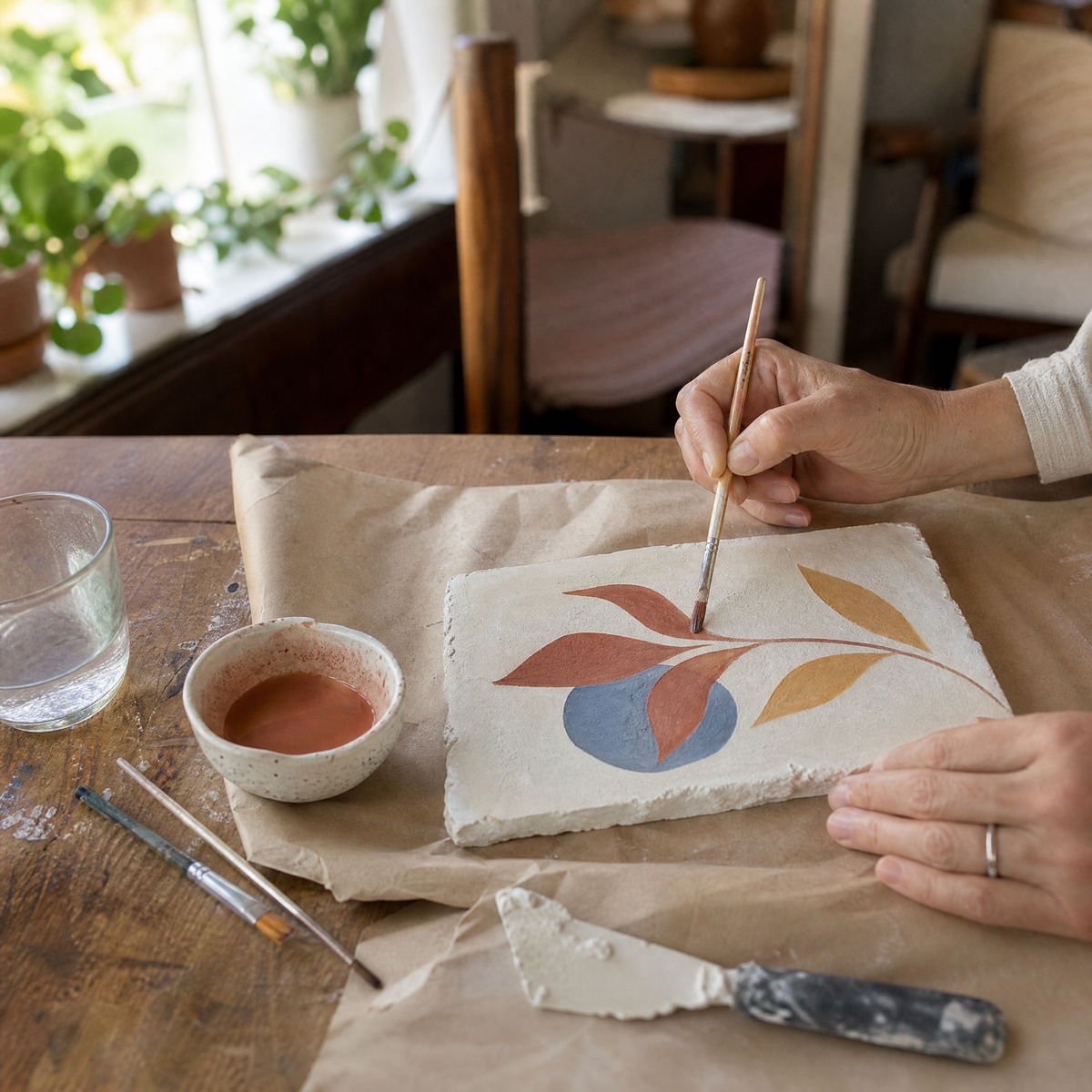
Why DIY Fresco Projects Are Ideal for Beginners
Small panel fresco projects are a safe, approachable way to learn this historic medium. Fresco—painting pigments directly onto wet plaster—was mastered by legends like Michelangelo and Giotto. While traditional frescoes cover large walls, small panels allow artists to practice the technique safely at home, learning pigment application, plaster preparation, and layering methods without scaffolding or heavy materials.
Hands-on experimentation teaches essential skills:
-
Understanding chemical interactions between pigments and lime plaster.
-
Timing the application for proper adhesion and color vibrancy.
-
Controlling moisture and brushwork for smooth layering.
Choosing Materials for Home Fresco Projects
Plaster Base: Lightweight pre-mixed lime plasters or gypsum-based boards (limeboard, MDF coated with lime plaster) are ideal for indoor work. Ensure panels are smooth and fully dried.
Pigments: Traditional mineral powders are stable and safe; synthetic, lightfast pigments may also be used. Avoid oil or acrylic paints—they do not bind chemically to plaster.
Tools & Brushes: Flat and round brushes of various sizes, palette knives for mixing, and separate tools for wet and dry layers preserve color integrity and prevent contamination.
Preparing Your Panel
-
Cleaning & Sanding: Remove dust or grease; light sanding ensures smooth pigment adhesion.
-
Mixing Plaster: Small batches of plaster mixed to creamy consistency. Avoid lumps for smooth application.
-
Intonaco Layer: Apply thin, final plaster coat in the area to be painted that day. Work quickly, as fresco dries fast.
Step-by-Step Painting at Home
-
Sketch Your Design: Use pencil, charcoal, or a full-scale cartoon on the dried undercoat (arriccio).
-
Mix Pigments: Blend powders with water; small batches ensure freshness and color fidelity.
-
Apply Pigment to Wet Plaster: Start with light tones, layering darker colors gradually for depth.
-
Maintain Moisture: Keep plaster slightly damp for extended sessions; work in smaller areas if needed.
-
Cure Naturally: Avoid heat or direct sunlight; pigments bind permanently as plaster carbonates.
Creative Techniques
-
Texture: Use sponges, brushes, or palette knives for varied effects.
-
Layering Colors: Experiment with pigment interaction on slightly damp plaster.
-
Stencils & Masking: Small panels are ideal for geometric patterns or precise edges.
Troubleshooting Common Challenges
-
Cracking & Flaking: Thin layers and slow drying prevent stress-induced cracks.
-
Uneven Colors: Consistent moisture and well-mixed pigments avoid blotches.
-
Smudging: Avoid reworking areas that are setting to preserve pigment integrity.
Displaying Your Small Panels
-
Framing & Protection: Shadow boxes allow air gaps and prevent surface abrasion.
-
Placement: Keep panels in stable temperature and humidity; avoid direct sunlight.
-
Mini-Exhibitions: Document practice panels together to track progress or create a curated display.
Benefits of DIY Fresco Projects
-
Safe Historical Exploration: Learn traditional techniques without risk.
-
Technical Skill Building: Develop brush control, timing, and understanding of plaster behavior.
-
Creative Freedom: Experiment with textures, layering, and color mixing in a low-stakes environment.
Integrating Panels Into Modern Interiors
-
Decorative Accents: Unique wall art or tabletop displays.
-
Complementing Décor: Mineral pigments work beautifully with natural materials like wood, stone, and metal.
-
Educational Display: Panels serve as hands-on teaching tools for students or workshops.
Safety & Practical Tips
-
Ventilation: Wear a dust mask and keep workspace well-ventilated.
-
Workspace Setup: Protect surfaces and organize pigments and tools.
-
Clean-Up: Wash brushes immediately; properly store leftover plaster and pigments.
Recommended Resources
-
Books & Tutorials: Classical texts and modern guides for DIY fresco techniques.
-
Online Communities: Forums, social media groups, and workshops for advice and feedback.
-
Supplies: Art stores and specialized vendors provide mineral pigments, lime plaster, and small panels.
Next Steps for Aspiring Fresco Artists
-
Progress from small to medium panels.
-
Experiment with mixed media (drawing, carving, encaustic).
-
Document each panel to track improvement and build a portfolio.
DIY fresco projects give artists a hands-on connection to centuries of tradition while allowing safe, creative exploration. Small panels are not just practice—they’re displayable works, fostering skill, intuition, and confidence for larger fresco projects.
Framing Hahnemühle Paper: Protecting Fine Art While Choosing the Right Frame
Displaying Contemporary Fresco Art in Modern Interiors